A N A S T R O J A I N I U S V E N T U R E
A Free 9 Module Astrophysics Course by Shaurya Jain
From the Big Bang to mission design the complete journey through space science,rocket engineering, orbital mechanics, and the future of human spaceflight.
What Is Astro Jainius?
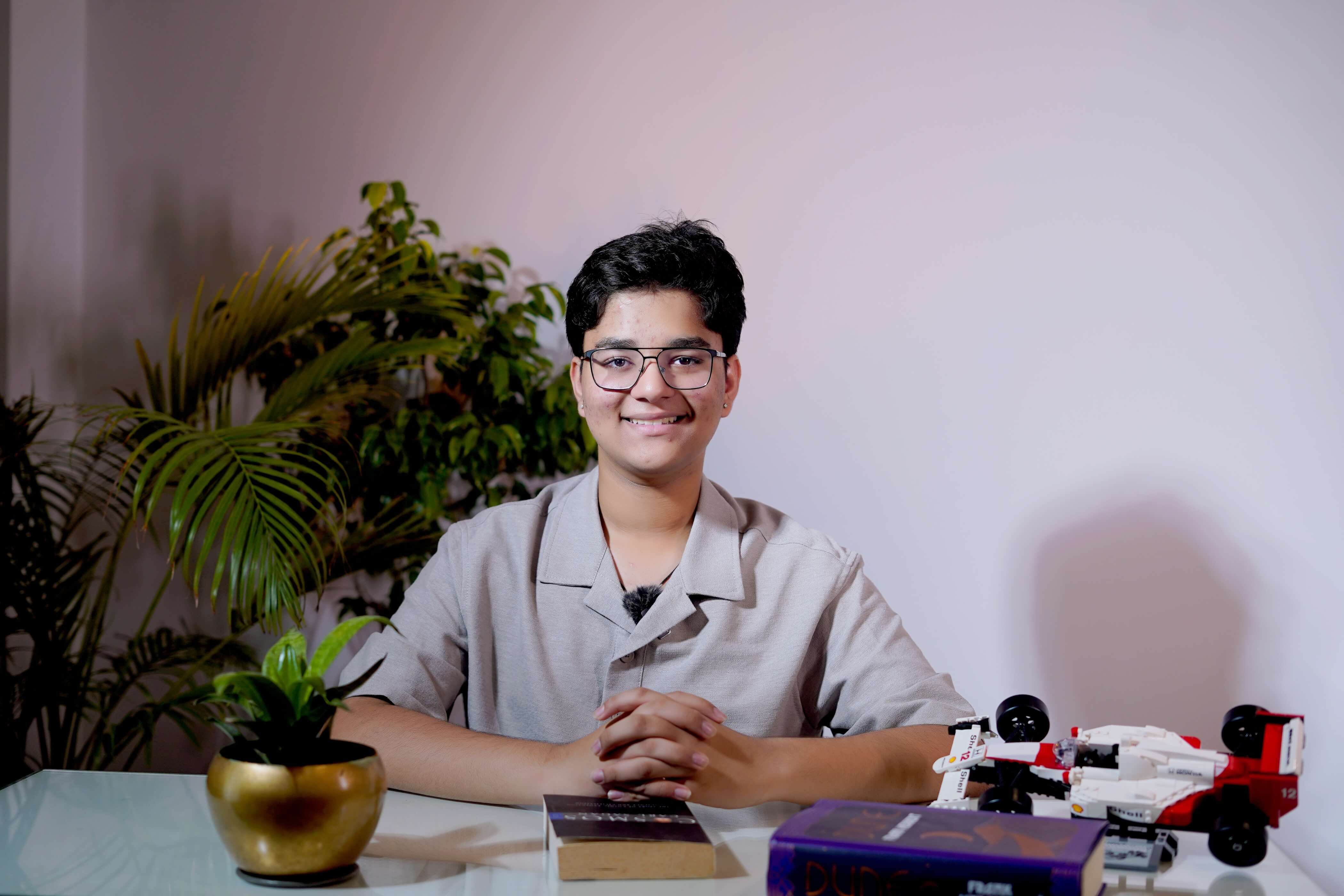
Astro Jainius is a free nine module course on astrophysics and space science, created and taught by Shaurya Jain, a Class XII student. His work includes a Gold Medal at the National Astronomy Challenge, participation in the International Astronomical Search Collaboration, and an astrophysics programme at the University of Cambridge under Professor Yves Gaspar. He also runs the Astro Jainius platform, where he shares concepts in astronomy and space science.
The course starts with how the universe began and moves step by step into space missions, rockets, launch physics, and satellites. It also covers how space systems are designed using tools like CAD, and gradually builds toward a final project where students design their own space mission.
The course is divided into nine modules, with each one connected to the next so the learning feels clear and structured. Along with the modules, supporting e books are provided to help students understand concepts better and revisit them whenever needed.
Not Just Content. A Complete Learning Arc.
Most space science content on the internet falls into one of two categories: either it is pitched at young children, or it assumes prior knowledge that most students simply do not have. Astro Jainius occupies a different space entirely.
The course is built for students who are serious about understanding space science at depth the kind of depth that supports university applications, research conversations, and genuine intellectual exploration. Every module is written, structured, and delivered with that standard in mind.
And because it is completely free, there is no barrier between you and the full nine-module experience.
9 Modules. No Filler. No Prerequisites.
Astro Jainius follows a single, carefully designed arc from the birth of the universe to the design of the next generation of space missions. Each module builds on the one before it, and every concept introduced is applied again later in the course.
1.The Beginning of Everything: How the Universe Was Born
Trace the origin of the universe from the Big Bang forward, understanding the cosmic framework that makes every space mission possible. This module grounds everything that follows.
2.Humanity's Leap: The Story of Manned Space Missions
From Yuri Gagarin's orbit to the Artemis programme, explore how humans engineered their way into space. Covers life support, crew module design, and the future of crewed spaceflight.
3.Rocket Evolution: From Gunpowder to the Stars
Eight centuries of rocketry traced in one module. From Chinese fire arrows to Falcon 9, understand how propulsion evolved and how modern reusable launch systems are designed.
4.Launch Physics: The Science That Gets Rockets Off the Ground
Newton's Laws, escape velocity, thrust-to-drag ratios, multistage separation, and trajectory control. The precise engineering physics that governs every single launch ever attempted.
5.Satellites: The Invisible Infrastructure Running the Modern World
Thousands of machines orbit Earth right now. This module explains how they work, how orbits are chosen, how satellites are engineered to survive deep space, and how they underpin modern civilisation.
6.Blueprint for Space: How Engineers Design the Future Before Building It
Before any rocket launches, everything is built virtually. This module covers CAD, 3D modelling, stress testing, simulation, and the digital engineering pipeline used by NASA, ISRO, and SpaceX.
7.The Engineering Mind: How Problem-Solving Prepares You for Space
A surprising and compelling module connecting Shaurya's competitive cubing background to core aerospace engineering skills: spatial reasoning, algorithmic logic, optimisation, and precision under pressure.
8.The Next Frontier: Building Human Civilisation Beyond Earth
Moon bases, Mars habitats, in-situ resource utilisation, autonomous rovers, and the engineering challenges of permanent deep space presence. This is active mission planning, not speculation.
9.Mission Blueprint: Design Your Own Journey into Space
The capstone module. Apply everything from astrophysics to orbital mechanics to CAD design in one original mission concept, mirroring how real aerospace mission planning actually begins.
Leave This Course Knowing More Than You Thought Possible
Not the superficial kind. The kind that holds up in a university seminar or a research conversation.
Escape velocity, thrust equations, staging systems, and real-world launch mechanics made completely accessible.
Orbital mechanics, types of orbits, engineering constraints, and why satellites are the invisible backbone of modern infrastructure.
How aerospace engineers design components virtually before manufacturing begins, and which tools the industry actually uses.
How pattern recognition, algorithmic thinking, and spatial reasoning connect to real aerospace problem-solving.
By the end of the capstone module, you will have designed an original space mission concept applying everything the course taught.
Nine modules. Nine e-books. The full arc from the Big Bang to mission design.
Enter your details once and the entire course is yours.

MEET YOUR INSTRUCTOR
Shaurya Jain
Shaurya Jain is a Class XII student studying Physics, Chemistry, Mathematics, Economics, and English under the CBSE curriculum, with a Class X score of 96.2 percent. His focus is on astrophysics and space science, supported by preparation in AP subjects and a target SAT score above 1550.
He has earned national level recognition in astronomy, including a Gold Medal at the National Astronomy Challenge, and has participated in asteroid search campaigns through the International Astronomical Search Collaboration. He has also attended an astrophysics programme at the University of Cambridge.
He has worked as a design engineer in the F1 in Schools competition with awards at regional and national levels. He also runs an astronomy platform on Instagram, @astro_jainius, reaching over 5,000 students, along with achievements in speedcubing.
ACADEMIC CREDENTIALS AND ACHIEVEMENTS
The following are verified academicand extracurricular achievements drawn from Shaurya's official university application profile.
🔭
Astronomy
Gold Medal, National Astronomy Challenge
🌐
International Research
IASC Asteroid Search Campaign Participant
⚙️
TECHNICAL SKILLS
Experience in CAD, 3D modelling, and video editing applied across engineering projects and school productions
🎓
Cambridge
Cambridge Summer Programme · Astrophysics ·Prof. Yves Gaspar
📖
Academics
CBSE Class X Board Examinations-96.2% All India
🗣️
Language
CEFR Level C2 English Highest Proficiency on the Common European Framework
⚗️
STEM COMPETITION
F1 in Schools Best Digital Media Award (National), Best Pit Display Award
🌍
International F1 in school mentor
Mentored German team Blue Wolves' and Portuguese team'Margonni' in F1 in Schools competition
✨
Astro Jainius
@astro_jainius on Instagram approximately 5,000 students reached over 10 months of astronomy and astrophysics content creation
🧩
Speedcubing
20 to 25 State and Regional Awards across competitive cubing tournaments
🤝
Volunteer Teaching
Robin Hood Society NGO Taught underprivileged students as part of community education
💼
Internship
IdeaSouq, UAE AI and Machine Learning industry exposure at an AI startup
WHY THIS COURSE
Why Astro Jainius Stands Apart

Taught by Someone Deeply Involved in the Field
National level achievements in astronomy, participation in international asteroid search campaigns, and academic exposure to astrophysics at Cambridge. Built on real experience, not just theory.

Structured as a Complete Learning Arc
A nine module journey that moves from the origin of the universe to real space missions, with each concept building on the last.

Free, With No Payment Ever
No fees. No hidden charges. No upsell waiting at the end. Enter your details once through the enrollment form and the entire course is yours.

Paired with E-Books
Selected modules are supported with e books that help reinforce key concepts and give you something to revisit after the lessons.

Designed for Focused Learners
Built for students who want clarity, depth, and a strong foundation in space science.

Covers the Future of Space Exploration
Explores Moon missions, Mars exploration, and the challenges of building beyond Earth.